Showing posts with label Bitcoinik. Show all posts

Tuesday, July 29, 2025

BNB holders can now earn daily passive income through the officially launched BNB payment integration by Find Mining.

findmining

Find Mining has launched the “Pay with BNB” feature, enabling users worldwide to access mainstream crypto mining services using BNB.

Recently, the high-profile cryptocurrency platform Find Mining announced the official completion of its integration with BNB payments, offering BNB holders a brand new channel for daily passive income. This means that users can earn stable daily passive income through the Find Mining platform simply by holding BNB assets.

This update does not involve BNB mining itself—since BNB is not a mineable asset—but introduces BNB as a convenient payment method to access affordable and genuine blockchain mining services.

To provide a smooth onboarding experience, Find Mining has outlined four steps for users to get started with BNB payments.

 1. Create an account.

Visit the official Find Mining website, where new users will receive a $15 hash rate bonus to help kickstart their cloud mining journey.

2. Deposit using BNB

After registration, users can visit the “BNB Deposit” page to obtain a unique wallet address. BNB can be transferred from an exchange or personal wallet, and the minimum deposit amount is 0.12 BNB.

3. Selectthe hash rate contract

Find Mining offers a range of cloud mining contracts designed to suit different user preferences, including short-term access, long-term options, and performance-focused plans.

4. Start receiving mining income

After the contract is activated, the mining income will be automatically calculated and credited to the user’s account daily. Users can withdraw the income to an external BNB wallet or reinvest it to expand their computing power holdings.

BNB holders can now earn daily passive income through the officially launched BNB payment integration by Find Mining. 1

(Click here to view more high-yield contract details)

Find Mining CEO said: “This integration with the BNB payment system is an important step for us to actively respond to market demand and community voice. We are committed to bringing value to more users through convenient payment methods and stable revenue models, helping users to easily realize asset appreciation.”

Core advantages of the platform

●BNB enables multi-currency mining.

Users can use BNB to purchase cloud mining contracts pegged to mainstream cryptocurrencies such as Bitcoin (BTC) and Ethereum (ETH). All mining revenue will be automatically settled in US dollars, providing a convenient and stable income experience across currencies.

●Automatic daily settlement system

Find Mining takes care of all the backend infrastructure, and users do not need to manage hardware or mining nodes. Revenue is automatically calculated and distributed to user accounts every day.

●Global infrastructure supported by more than 135 data centers

Find Mining is supported by a network of more than 135 data centers across multiple regions, helping to ensure stable delivery of computing power, efficient contract execution, and transparent data processing.

●New User Trial Rewards

Find Mining offers a trial contract to new users when they sign up, allowing them to experience the platform’s mining process without an initial deposit. This reward is designed to lower the entry barrier for new users and provide a risk-free onboarding experience.

●Security and compliance infrastructure

Find Mining attaches great importance to fund security and regulatory compliance. The platform integrates multiple encryption protocols, adopts a cold and hot wallet separation architecture, and complies with relevant compliance standards in the jurisdictions where it operates.

●24/7 multilingual customer support

Find Mining provides 24/7 customer service in multiple languages, ensuring timely assistance to users in all regions of the world.

BNB holders can now earn daily passive income through the officially launched BNB payment integration by Find Mining. 2

About Find Mining

Founded in 2018 and headquartered in the UK, Find Mining is a leading global cryptocurrency computing power service provider. With over 9.4 million registered users, it operates 135 professional mining facilities around the world, including in the United States, Italy, Iceland, Norway and other countries and regions. The company provides secure, compliant and transparent blockchain computing power solutions, providing users with a stable and intelligent one-stop mining experience.

Official Website:https://findmining.com

App Download:You can download it from the official website (or search for “Findmining” on Google Play)


from Bitcoinik https://ift.tt/EMjAJBV

Sunday, July 27, 2025

SIM Mining launches new cloud mining plans to make cryptocurrency mining easier and more profitable $58,888

sim mining

London news – As Bitcoin breaks through the $100,000 mark and the cryptocurrency market continues to rise in 2025, SIM Mining, a well-known British cloud mining company, announced the launch of a series of new cloud mining plans. These plans are designed to allow everyday users to easily participate in cryptocurrency mining and earn passive income without any hardware or technical knowledge.

Simple, safe, transparent, and everyone can participate in the mining experience

SIM Mining‘s new mining plan provides a convenient, safe and efficient opportunity for beginners and experienced investors. Users do not need to worry about complex equipment configuration or high electricity bills. Just sign up and choose the right plan to enjoy a daily income. In addition, the company promises to provide a full capital refund to provide users with peace of mind.

As a British financial certified company, SIM Mining always adheres to transparent operations. All mining activities can be monitored in real time, and users can clearly understand the source of each income. Safety and reliability are the core promises of SIM Mining.

Environmentally friendly mining, helping sustainable development

Compared with traditional mining methods, SIM Mining uses environmentally friendly mining technology to reduce carbon emissions by optimizing energy consumption and using green energy. This is not only in line with the trend of global sustainable development, but also provides users with a more socially responsible investment option.

How to start? Easy to get started!

Starting today, new users can get a $100 bonus when they register, and enjoy a $1 sign-in bonus every day. Supports a variety of mainstream cryptocurrencies, including Bitcoin (BTC), Ethereum (ETH), Dogecoin (DOGE), Litecoin (LTC), USDC, USDT (TRC20 and ERC20), Ripple (XRP), Solana (SOL), etc., to meet users’ diverse investment needs.

About SIM Mining

SIM Mining is a cloud mining company headquartered in the UK with UK financial certification qualifications. The company is committed to providing simple, efficient and sustainable cryptocurrency mining solutions to global users through innovative technologies and user-friendly services.

Contact Us

Official website: simmining.com

Official email: info@simmining.com

Whether you are a novice to cryptocurrency or an experienced investor, SIM Mining will be your important partner on the road to cryptocurrency wealth. Come join us and start a new era of cloud mining together!


from Bitcoinik https://ift.tt/qN9y0rP

Thursday, July 24, 2025

Analysis of Bitcoin’s Price Decline as of July 24, 2025

bitcoin price update

On July 24, 2025, Bitcoin experienced a notable price decline, dropping from its recent all-time high of approximately $123,000 to around $115,500, representing a decrease of roughly 6-7%. This downturn, while not unprecedented given the volatile nature of cryptocurrencies, has sparked significant discussion among investors and market analysts. This note aims to provide a comprehensive analysis of the factors contributing to this price drop, drawing on recent data, social media insights, and news reports to offer a detailed understanding of the market dynamics at play.

Background on Bitcoin’s Price Movement

Recent data from reliable sources indicates that Bitcoin reached a peak near $123,000, likely around mid-July 2025, before beginning its descent. For instance, on July 14, 2025, prices were around $119,117, and by July 24, 2025, they had fallen to $115,500, based on historical price trends. This decline aligns with observations from X posts and market data, suggesting a significant correction following a period of rapid appreciation.

Detailed Reasons for the Price Drop

1. Profit-Taking After All-Time Highs

One of the primary drivers of the recent price drop appears to be profit-taking by investors. After Bitcoin surged to a new all-time high near $123,000, many traders and long-term holders, often referred to as “whales,” decided to lock in their gains. This behaviour is typical in financial markets, where assets experience pullbacks after significant rallies as investors cash out. An X post by

@techmarketcycle on July 20, 2025, noted, “Bitcoin recently hit a new ATH near $123K, prompting many investors—especially long-term holders and whales—to lock in profits,” highlighting this trend. Another X post by

@TheJessePeralta on July 23, 2025, reinforced this, stating, “Bitcoin recently peaked near $123K and has since slid below $118K. Traders and whales appear to be cashing in, triggering selloffs.” This profit-taking likely contributed to increased selling pressure, pushing prices downward.

2. Cascading Liquidations of Leveraged Positions

The price decline has also been exacerbated by cascading liquidations of leveraged positions, particularly long positions. When Bitcoin’s price begins to fall, it can trigger automatic liquidations of leveraged bets, where traders borrow funds to amplify their positions. This can create a feedback loop, as liquidations add to the selling pressure, further driving down the price. Data from CoinGlass, a reliable source for liquidation information, shows that in the last 24 hours as of July 24, 2025, there were $583.62 million in long liquidations compared to $145.64 million in short liquidations, totaling $729.26 million, with 213,462 traders affected. The largest single liquidation was on OKX – BTC-USDT-SWAP, valued at $17.35 million, indicating significant leveraged activity. This suggests that the drop in price led to a substantial number of long positions being forcibly closed, amplifying the decline.

3. Outflows from Bitcoin Exchange-Traded Funds (ETFs)

Institutional interest, as reflected in Bitcoin ETFs, has also waned, contributing to the price drop. Recent data from Farside Investors indicates that spot Bitcoin ETFs experienced net outflows of $131 million on July 22, 2025, ending a 12-day inflow streak. Further, cumulative net outflows over the past week exceeded $285 million, with specific days like July 24, 2025, seeing approximately $86 million withdrawn, according to CryptoBriefing. An X post by

@CoinpediaNews on July 22, 2025, mentioned, “A $130M #ETF outflow… hit #crypto hard today,” aligning with this data. These outflows suggest that institutional investors are either taking profits or reducing their exposure to Bitcoin, adding to the downward pressure on its price. This shift is particularly notable given the strong inflows earlier in the year, with some reports indicating over $120 billion in inflows in 2025, but recent weeks have seen a reversal.

4. Macroeconomic Uncertainty and Fed Policy

The broader economic landscape, particularly uncertainty surrounding the Federal Reserve’s monetary policy, has also played a role. Federal Reserve Chair Jerome Powell has emphasised a cautious approach, stating on July 1, 2025, that the Fed plans to “wait and learn more” about the impact of tariffs on inflation before lowering interest rates, as reported by Reuters. This wait-and-see stance has created uncertainty in financial markets, including cryptocurrencies, as investors weigh the potential effects on risk assets like Bitcoin. President Donald Trump’s criticism, calling Powell a “numbskull” on July 22, 2025, and demanding rate cuts, has added to market jitters, potentially affecting investor sentiment. An X post by

@0xSparkless on July 21, 2025, noted, “Another major factor is that governments are increasingly regulating $BTC and introducing stricter rules,” which could be linked to broader macroeconomic concerns. This uncertainty likely contributed to the recent price decline.

5. Potential Government Sales by the UK

Adding to market concerns is the news that the UK government is considering selling a substantial amount of seized Bitcoin. Reports from The Telegraph and CryptoSlate indicate that the UK holds at least 61,000 BTC, valued at over $7 billion, seized primarily from a 2018 Chinese Ponzi scheme. An X post by

@blockbriefly on July 20, 2025, mentioned, “The UK government’s consideration of selling £5 billion worth of seized Bitcoin… has likely increased concerns about an increase in supply,” suggesting potential selling pressure. This move, aimed at addressing budget deficits, could add significant supply to the market, especially given the UK’s position as the third-largest Bitcoin holder among governments. However, legal challenges, including claims from victims, may delay any sale, but the anticipation alone could be impacting prices.

Supporting Data and Observations

To provide a clearer picture, below is a table summarising key data points from recent market activity:

Additionally, historical price data shows fluctuations, with prices on July 23, 2025, at $119,955, dropping to $118,629 on July 24, and stabilising at $115,500 by the end of the day, indicating a continued downward trend in the short term.

Market Sentiment and Future Outlook

X posts and news articles suggest mixed sentiments, with some viewing the dip as a “healthy correction” (e.g.,

@CoinpediaNews on July 22, 2025, stating “#BTC still in the growth zone—not in a crash spiral”), while others warn of further downside due to macroeconomic factors and potential government sales. The market’s reaction to Fed policy and ETF flows will likely be critical in determining whether Bitcoin finds support at current levels or faces further declines. Given Bitcoin’s history of volatility, long-term holders may see this as a buying opportunity, but short-term traders could face continued uncertainty.

Conclusion

In conclusion, Bitcoin’s recent price drop from around $123,000 to $115,500 as of July 24, 2025, can be attributed to a combination of profit-taking after reaching all-time highs, cascading liquidations of leveraged positions, outflows from Bitcoin ETFs, macroeconomic uncertainty surrounding Fed policy, and the potential sale of seized Bitcoin by the UK government. While the cryptocurrency market is known for its volatility, understanding these underlying causes provides valuable insights for investors. As the market digests these developments, future movements will depend on institutional flows, regulatory clarity, and macroeconomic stability.


from Bitcoinik https://ift.tt/aTJkWV9

Cryptocurrency Market Soars as New Laws and Institutional Moves Drive Growth

Sol ETH BTC combo Crypto

July 24, 2025 – The cryptocurrency market is riding a wave of optimism, with Bitcoin surpassing $120,000 and Ethereum nearing $4,000, fueled by clearer regulations and growing institutional interest. Recent legislative breakthroughs and bold market predictions have ignited enthusiasm across the industry.

Bitcoin Hits New Heights Amid Policy Shifts

Bitcoin reached a record high above $120,000 this week, driven by institutional investments and a more crypto-friendly regulatory landscape in the United States. On July 18, a new U.S. law regulating stablecoins was enacted, requiring issuers to maintain full reserves and obtain clear licensing. This move is seen as a step toward integrating digital currencies into everyday financial systems.

U.S. financial regulators, including the Federal Reserve and the FDIC, issued guidance permitting banks to hold cryptocurrencies, signalling a major shift toward mainstream adoption. Social media platforms like X are buzzing with excitement, with users predicting significant capital inflows as banks prepare to custody digital assets like Bitcoin.

Industry leaders are optimistic about Bitcoin’s trajectory. A prominent crypto entrepreneur forecasted that Bitcoin could climb to $250,000 and Ethereum to $10,000 by the end of 2025, citing growing institutional demand. While some analysts view these targets as ambitious, the total crypto market capitalisation, now at $3.9 trillion, reflects strong momentum, with Bitcoin holding over 60% of the market share.

Ethereum and Altcoins See Mixed Results

Ethereum has surged by more than 150% in recent months, bolstered by institutional interest and anticipation of new financial products like ETH staking ETFs. However, some validators are cashing out their staked ETH, indicating both profit-taking and confidence in Ethereum’s long-term potential. Meanwhile, BNB has climbed past $800, overtaking Solana to become the fifth-largest cryptocurrency by market cap.

Not all altcoins are thriving. Solana experienced a sharp 10% drop in a single day, and other tokens like BONK and ICP faced significant losses. Despite these setbacks, market watchers are optimistic about emerging projects like Flare and Aleo, with some speculating about an upcoming “altcoin season” as Bitcoin’s dominance shows signs of easing.

Global Regulatory Progress Fuels Adoption

Beyond the U.S., other nations are embracing crypto. South Korea’s Shinhan Bank introduced cryptocurrency services through its mobile app, while Thailand launched a pilot program allowing tourists to exchange digital assets for local currency. In Hong Kong, a major brokerage began offering crypto trading, hinting at a softening of China’s historically strict stance on digital currencies.

Challenges remain, however. A recent hack of a crypto exchange resulted in losses of over $40 million, and legal scrutiny is intensifying for some decentralised finance (DeFi) platforms. A high-profile case involving a DeFi developer continues to raise questions about privacy and regulatory oversight in the sector.

Institutions and Corporations Double Down

Corporate adoption of cryptocurrencies is accelerating. A leading gaming company expanded its crypto treasury by $150 million, while a media firm acquired $2 billion in Bitcoin. Major banks are also exploring crypto-backed financial products, and partnerships with platforms like Coinbase are enabling traditional financial institutions to offer crypto trading to their clients.

Looking Ahead

As global regulators work to refine crypto policies, the industry appears poised for further growth. Proposed U.S. legislation could further clarify the legal status of digital assets, while companies like Ripple pursue expanded roles in the financial system, potentially driving XRP to new heights. Analysts project XRP could reach $4–$10 by 2030, though short-term volatility remains a concern.

While the crypto market’s ups and downs persist, the combination of regulatory progress, institutional investment, and technological advancements suggests a bright future. Investors are encouraged to remain cautious, with online communities emphasising the importance of strategic profit-taking to navigate market fluctuations. Stay tuned for further developments as the crypto market continues to evolve.

Cryptocurrency Market Soars as New Laws and Institutional Moves Drive Growth 1
Cryptocurrency Market Soars as New Laws and Institutional Moves Drive Growth 2


from Bitcoinik https://ift.tt/AmBxjrU

Current State of Bitcoin and the Crypto Market: An In-Depth Analysis

Current State of Bitcoin and the Crypto Market: An In-Depth Analysis

Introduction to the Crypto Market

The cryptocurrency market has experienced remarkable growth and transformation since the inception of Bitcoin in 2009. Initially viewed with skepticism, the crypto market has evolved into a multi-billion-dollar industry with thousands of digital assets available. Bitcoin, as the pioneer of cryptocurrencies, laid the groundwork for subsequent projects, which have diversified the landscape to include various types of crypto, each with unique functionalities and use cases.

The current structure of the market comprises a multitude of cryptocurrencies, each serving different purposes. While Bitcoin remains at the forefront, characterized as a store of value and a digital currency, other cryptocurrencies have emerged to cater to specific needs. For instance, Ethereum introduced smart contracts, enabling automated transactions that expand beyond simple currency exchanges. Other notable alternatives, often referred to as altcoins, include Ripple for international money transfers, Litecoin for faster transactions, and many others aimed at addressing various challenges across industries.

This rapid diversification has also spurred innovation, leading to applications in sectors such as finance, supply chain management, and digital identity solutions. Moreover, the rise of decentralized finance (DeFi) has fueled interest, allowing individuals to engage in lending, borrowing, and trading without relying on traditional financial institutions. The total market capitalization of all cryptocurrencies highlights the growth, which has seen staggering increases in value as public awareness and adoption rise.

As we explore the intricacies of this evolving market, it is essential to examine not only Bitcoin’s continuous influence but also the broader ecosystem of cryptocurrencies that have emerged. This analysis will shed light on the challenges and opportunities that the crypto market presents today and the potential trajectory of Bitcoin and other digital assets in the future.

Bitcoin: The Cornerstone of Cryptocurrency

Bitcoin, often referred to as the cornerstone of cryptocurrency, plays a pivotal role in shaping the digital finance landscape. Launched in 2009 by an entity under the pseudonym Satoshi Nakamoto, Bitcoin introduced the revolutionary concept of decentralized currency, underpinned by its innovative blockchain technology. This technology allows Bitcoin transactions to be securely processed and recorded without the need for intermediaries, fundamentally altering how value is exchanged globally.

As the first cryptocurrency, Bitcoin has established foundational principles that have been emulated by thousands of other digital currencies. It operates on a peer-to-peer network, enabling users to send and receive payments directly, thereby circumventing traditional banking systems. This decentralization not only fosters increased security but also promotes financial inclusion in areas where conventional banking services are limited.

Bitcoin has accrued a reputation as “digital gold” due to its finite supply, capped at 21 million coins, which imbues it with scarcity analogous to precious metals. This characteristic has attracted investors seeking to hedge against inflation and economic instability. Historical price fluctuations exhibit Bitcoin’s volatility; however, its long-term trend reflects a substantial rise in value, affirming its position within the broader crypto market.

Adoption rates continue to grow, with more individuals and institutions recognizing Bitcoin as a legitimate medium of exchange and a viable store of value. Companies such as Tesla and Square have incorporated Bitcoin into their investment strategies, signaling confidence in its potential. Additionally, advancements in payment technologies and increased trading platforms have facilitated greater accessibility to the Bitcoin market, further encouraging its adoption.

In sum, Bitcoin stands as a foundational pillar in the cryptocurrency space, influencing its development and acceptance while continuing to attract attention from both retail and institutional investors alike.

Current Market Trends and Data Analysis

The cryptocurrency market has experienced a dynamic landscape in recent months, characterized by significant price fluctuations and varying investor sentiment. Bitcoin, as the flagship digital currency, remains a focal point in these trends. Recent data shows that Bitcoin’s price has been oscillating within a specific range, reflecting both upward and downward trends in market capitalization. Currently, Bitcoin holds a market dominance of approximately 45%, indicating its pivotal role in the overall crypto ecosystem.

Market capitalization for Bitcoin has seen substantial growth, with its value climbing above $500 billion at certain points this year, demonstrating robust interest from institutional investors. This surge is accompanied by an increase in trading volumes, showcasing heightened activity as traders respond to market signals. Several key factors, including macroeconomic developments and regulatory news, continue to influence these price movements. Analysts have observed bullish patterns emerging, particularly following news about broader acceptance of Bitcoin in mainstream finance.

However, the market is not without its corrective phases. Investor sentiment indicators such as the Fear and Greed Index have shown oscillations between fear and greed, signaling potential shifts in market momentum. Altcoins, while following Bitcoin’s lead, have also exhibited distinct market behaviors, with some recording substantial gains spurred by advancements in technology and increased utility in various sectors. Ethereum, for instance, continues to benefit from its smart contract functionalities, contributing to its significant market clout.

Overall, observing the ongoing trends in the crypto space reveals intricate patterns indicative of both investor confidence and market volatility. As Bitcoin and altcoins navigate through cycles of growth and decline, the evolving nature of market sentiment remains a critical aspect to monitor for potential future developments.

Key Factors Influencing the Crypto Market

The crypto market is a complex landscape influenced by a multitude of factors that can significantly impact its volatility and overall performance. One of the most critical aspects is regulatory developments. Governments and regulatory bodies worldwide are increasingly focusing on creating frameworks and guidelines for cryptocurrencies, particularly Bitcoin. These regulations can have both positive and negative effects on market sentiment, which in turn affects investor confidence and participation. For instance, clearer regulations may lead to increased institutional investment in Bitcoin and other cryptocurrencies, while stringent policies may deter market participants.

Technological advancements also play a pivotal role in shaping the dynamics of the crypto market. Innovations such as blockchain technology improvements, scalability solutions, and interoperability between different crypto networks contribute to the evolving landscape. For example, enhancements in transaction speeds and security protocols can attract more users to Bitcoin and other cryptocurrencies, thus potentially increasing market demand. Additionally, developments in decentralized finance (DeFi) and non-fungible tokens (NFTs) have created new avenues for investment and utility, further contributing to market growth.

Macroeconomic indicators, such as inflation rates and interest rates, are equally influential. A rise in inflation, for instance, often prompts investors to seek alternative assets, including Bitcoin, as a hedge against declining purchasing power. Conversely, higher interest rates may draw investors toward traditional assets, thus affecting capital flows into the crypto market. Geopolitical events, such as political instability or economic sanctions, can also impact crypto prices, as they may drive individuals and entities toward decentralized assets, including Bitcoin, as a safe haven.

All these factors converge, creating a highly dynamic environment that shapes market volatility and investor behavior. Understanding the interplay between these elements is crucial for anyone looking to navigate the crypto space effectively.

Institutional Investment in Bitcoin and Cryptocurrencies

The landscape of Bitcoin and the broader cryptocurrency market has been dramatically transformed by the increasing interest and participation of institutional investors. Over recent years, companies, hedge funds, and banks have gradually recognized cryptocurrencies as legitimate investment vehicles. This shift has not only increased the adoption of Bitcoin but has also sparked a broader interest in other crypto assets, making them part of mainstream investment portfolios.

Historically, cryptocurrencies attracted individual investors, often seen as speculative assets. However, as institutional players began to allocate significant funds towards Bitcoin and cryptocurrencies, the narrative around these digital assets evolved. Notable institutions, such as public companies and investment giants, have started to include Bitcoin in their balance sheets and investment strategies. By doing so, they signify a growing confidence in Bitcoin’s value stability and potential as a store of wealth, akin to gold.

This institutional enthusiasm for crypto has led to enhanced market stability, as the substantial capital flows from these investors can mitigate volatility often associated with the crypto market. When large entities invest in Bitcoin, they typically employ strategies that entail long-term holding, which further supports Bitcoin’s price. The increased capital inflow also provides additional liquidity to the markets, making it easier for retail investors to navigate trading dynamics.

However, the surge of institutional interest in Bitcoin and other cryptocurrencies also introduces new dynamics that retail investors must consider. As institutional investments rise, there is potential for market manipulation or adverse effects on price movements driven by macroeconomic factors beyond the control of individual investors. In conclusion, the growing institutional investment in Bitcoin and the crypto market is reshaping the financial landscape, offering both opportunities and challenges for all types of investors.

Risks and Challenges Facing the Crypto Market

The cryptocurrency landscape, with Bitcoin often leading the charge, presents a myriad of risks and challenges that potential investors must navigate. One of the most significant concerns is market volatility. Bitcoin and other cryptocurrencies have been known to experience rapid price fluctuations, driven by factors such as market sentiment, regulatory news, and macroeconomic trends. Such volatility can lead to substantial gains, but it equally poses the risk of equally sizable losses, making it essential for investors to remain cautious.

Additionally, security issues are an ever-present danger in the crypto market. The decentralized nature of cryptocurrencies, while a feature that offers privacy and autonomy, also exposes investors to potential hacks and scams. High-profile incidents, such as exchange breaches, have resulted in millions of dollars worth of Bitcoin and altcoins being stolen. Investors should employ robust security measures, such as using hardware wallets and two-factor authentication, to mitigate these risks.

Regulatory uncertainties further complicate the investment landscape. As governments worldwide grapple with the implications of cryptocurrencies, varying approaches to regulation can impact market stability. Changes in regulatory frameworks can lead to legal complications for those investing in Bitcoin or other digital assets, causing unintended consequences and risk exposure.

Finally, the environmental impact of cryptocurrency mining presents a growing concern, especially with Bitcoin’s energy-intensive proof-of-work consensus mechanism. Critics argue that the ecological footprint of crypto mining could undermine progress in global sustainability efforts. This environmental aspect may lead to increased scrutiny from regulators and the public, further complicating the overall outlook for the crypto market.

Future Outlook for Bitcoin and the Crypto Market

The future of Bitcoin and the broader cryptocurrency market is a topic of considerable interest and speculation. With the rapid evolution of technology and shifting regulatory landscapes, several key developments are anticipated that could significantly influence the trajectory of this digital asset. One major trend expected to shape the future is the push for regulatory clarity. Governments around the globe are increasingly recognizing cryptocurrencies and are working to establish frameworks that govern their use. This regulatory environment will likely bring more stability and legitimacy to Bitcoin, potentially increasing its adoption among institutional investors and the general public.

In addition to regulatory aspects, technological innovations are poised to play a crucial role in the future of Bitcoin and the crypto ecosystem. Advancements such as Layer 2 solutions, including the Lightning Network, promise to enhance transaction speeds and reduce costs, making Bitcoin more practical for everyday transactions. Furthermore, decentralized finance (DeFi) platforms continue to gain traction, allowing users to engage in lending, borrowing, and trading without intermediaries. These technological strides will likely fuel greater engagement with Bitcoin and other cryptocurrencies, highlighting their utility beyond simple investment vehicles.

Moreover, the potential for mainstream adoption is becoming more viable. As payment systems, financial institutions, and corporations explore the integration of Bitcoin into their operations, public acceptance of cryptocurrencies is steadily increasing. Predictive models suggest that if these trends continue, Bitcoin could solidify its position as a fundamental component of the financial landscape. Market behavior may reflect increased volatility in the short term, yet a long-term bullish outlook is favored by analysts, given the growing infrastructure and community support for crypto. The interaction of these factors will determine the future of Bitcoin and the broader crypto market, paving the way for a potentially transformative era in finance.

The Role of Education and Resources in Crypto Investing

As the Bitcoin and crypto market continues to evolve at a rapid pace, the significance of education and accessible resources cannot be overstated for prospective investors. Understanding the fundamentals of cryptocurrencies, market dynamics, and potential risks associated with investing in digital assets is essential for anyone looking to navigate this complex landscape. A solid grounding in these areas not only enhances one’s investment acumen but also instills the confidence necessary to make informed decisions.

Numerous resources are available for those seeking to deepen their understanding of crypto investments. Online courses, such as those offered by platforms like Coursera, Udemy, or specialized cryptocurrency websites, provide structured content that covers various aspects of digital currency investment, from basic concepts to advanced trading strategies. Additionally, reputable blogs and news websites focused on Bitcoin and the broader crypto market can offer timely insights, helping investors stay updated on market trends, regulatory changes, and technological developments.

Participating in forums and discussion groups, such as those found on Reddit or specialized crypto communities, can also foster learning through shared experiences and collective knowledge. Engaging with peers allows individuals to ask questions, obtain diverse viewpoints, and learn from the successes and failures of others. Moreover, these platforms often feature expert opinions, enhancing a newcomer’s understanding of complex issues within the crypto space.

While acquiring knowledge, it is crucial to practice due diligence. The crypto market is notorious for its volatility, making it imperative for investors to continuously enhance their knowledge base. Participating in webinars, following key influencers on social media, and reading whitepapers can provide valuable insights. In a sector that is constantly evolving, continuous learning and adaptation will empower investors to actively manage their portfolios and potentially achieve their financial goals.

Conclusion: Navigating the Waves of the Crypto Market

The landscape of Bitcoin and the broader crypto market is characterized by volatility, innovation, and rapid changes. Throughout this analysis, several key considerations have emerged regarding the current state of digital assets. Firstly, Bitcoin remains the leading cryptocurrency, both in terms of market capitalization and acceptance. Its prominence underscores the increasing interest in cryptocurrencies as a whole, attracting both institutional and retail investors.

Moreover, the evolving regulatory environment plays a crucial role in shaping the future of crypto investments. Various governments are implementing new policies aimed at fostering development while addressing potential risks associated with digital currencies. These regulations not only influence market dynamics but also provide a framework that could enhance the legitimacy of cryptocurrencies in the financial ecosystem.

Additionally, technological advancements continue to enhance the functionality and security of Bitcoin and other cryptocurrencies. Developments such as the Lightning Network aim to facilitate faster transactions, making Bitcoin more appealing for everyday use. Consequently, the potential for Bitcoin to evolve as a mainstream payment method increases, signifying a positive trend in its adoption.

However, it is essential for investors to approach the market with caution, considering the inherent risks associated with crypto investments. Volatility in asset prices, uncertainties in regulation, and technological challenges can affect market stability. Conducting thorough research and staying informed about market trends are vital strategies for anyone looking to navigate the complexities of the crypto landscape. As the market continues to develop, maintaining a balanced perspective on investment opportunities in Bitcoin and other digital currencies will be crucial.

In conclusion, the cryptocurrency market presents both opportunities and challenges. By understanding the dynamics at play and remaining vigilant, investors can better position themselves to benefit from the ongoing evolution of Bitcoin and the broader crypto ecosystem.


from Bitcoinik https://ift.tt/3pTkrjF

Friday, July 18, 2025

Delta Exchange: A Closer Look at Crypto FnO Trading, Safety, and Tools

delta exchange

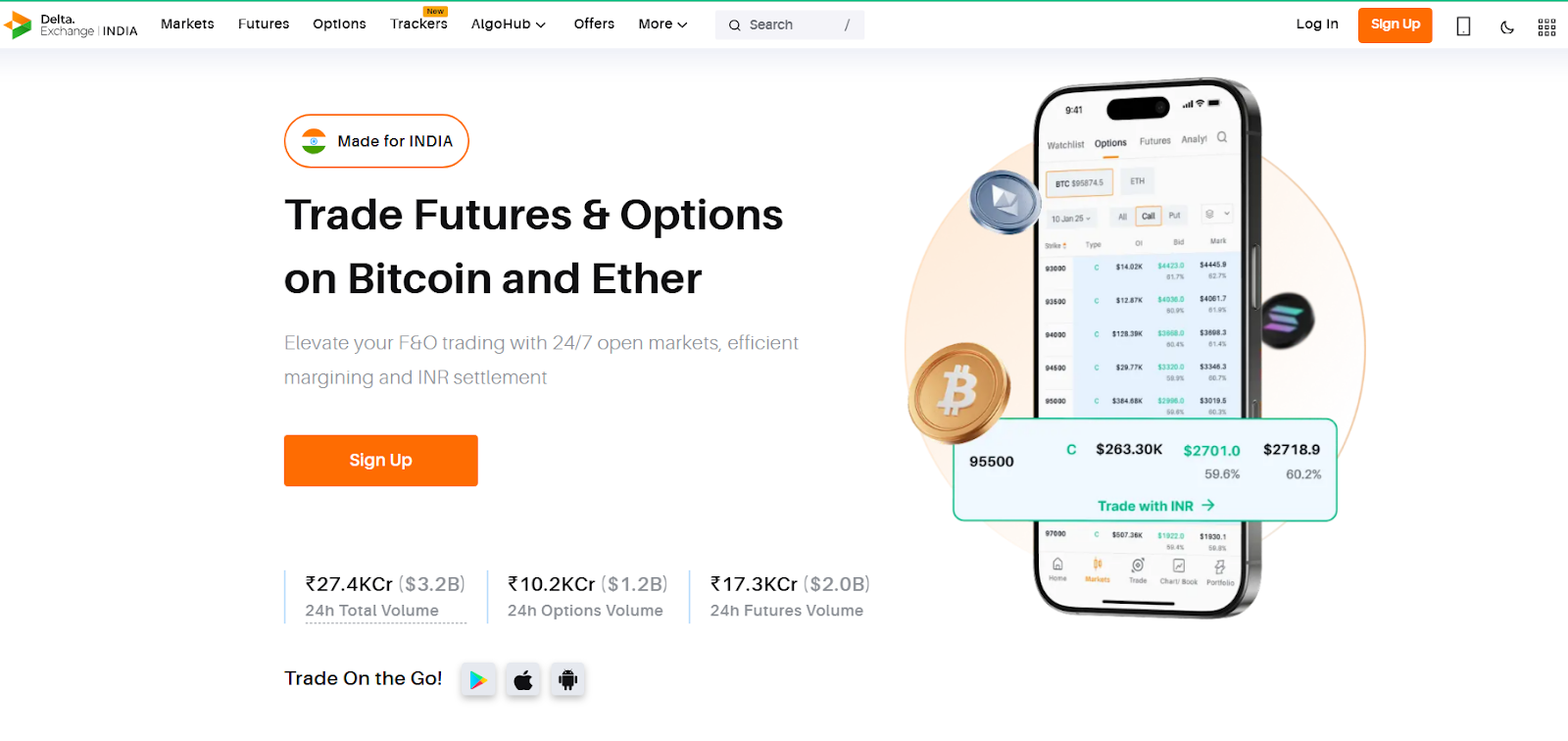
If you’ve ever bought Bitcoin or any other crypto, held it for months, and waited for that perfect exit – you’re not alone. That’s how most of us started. But the market doesn’t always move in upward trends. Over the years, more traders have been exploring crypto FnO to manage risks, stay active in sideways markets, and build more structured strategies. 

This shift has pushed crypto derivatives exchanges to rethink their approach. Delta Exchange has been part of that transformation – building tools around how traders actually trade. As India’s largest crypto derivatives exchange, it’s become a go-to for those looking beyond simple buy-and-hold setups. 

In this blog, we’ll look at what Delta offers and how it supports your trading styles and investment goals. 

A Brief on Delta Exchange

For traders stepping into crypto FnO trading, choosing the right platform isn’t just about low fees or advanced features – it’s about trust, compliance, and ease of use. Delta Exchange was built to meet those expectations head-on. As one of the top crypto derivatives exchanges, it allows you to trade crypto derivatives contracts on Bitcoin (BTC), Ethereum (ETH), Ripple (XRP) and more.

Delta Exchange: A Closer Look at Crypto FnO Trading, Safety, and Tools 3
Source | Delta Exchange for safe crypto FnO trading

You don’t need to own crypto or convert currencies to participate in the market – which means full FIU-India compliance, INR deposits and withdrawals, and a structure designed under local regulations. The platform sees over $3 billion in daily trading volume, with features like portfolio margin and small lot sizes making it accessible for both new and experienced traders. 

If you’re interested in trading crypto derivatives, Delta offers a compliant space to get started.

Why’s Delta Exchange Different From Other Platforms 

What sets Delta Exchange apart from the other indian crypto exchanges is its ability to simplify complex trades for all traders. You can test a basic trade or build multi-leg strategies – the tools are designed for clarity and safety.

Delta Exchange: A Closer Look at Crypto FnO Trading, Safety, and Tools 4
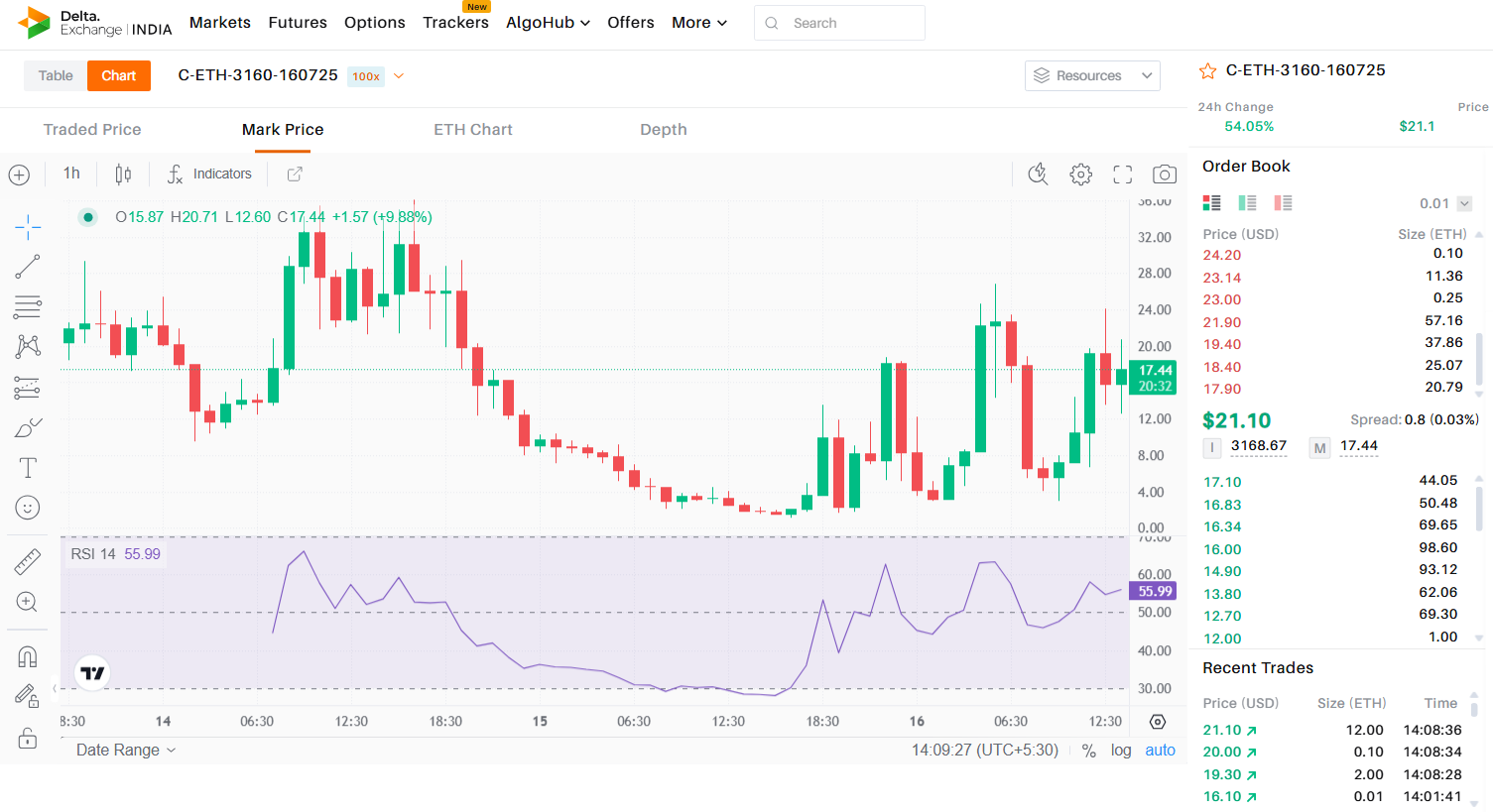
Source | Trading crypto derivatives (options) on ETH

  • Strategy builder 

One of Delta’s most used features is its strategy builder, where you can try out advanced setups like ratio spreads, long straddles, or short call/put options, without needing to code. It’s a visual interface where each leg of a strategy is laid out clearly, with a payoff chart, breakeven points, and potential losses or gains before execution, making it useful for traders who want more control. 

  • Trading bots

The crypto derivatives exchange also supports automated trading bots – customized with entry/exit parameters and used across perpetual and futures contracts. Whether you’re hedging or just trying to run trades while away from the screen, bots offer hands-free support.

  • High leverage 

High leverage is available on most contracts, giving you more exposure with less capital. Say you invest ₹2,000 to trade ETH with 100x leverage – this gives you control over a ₹2,00,000 position. If ETH moves in your favor, even small price changes can bring high returns. That said, the risk is also high. If the market moves against you, it can lead to losses just as fast.

  • Demo account 

If you’re still figuring things out, the demo account lets you test crypto FnO trading strategies without using real funds or deposits. It mirrors the live market environment, so you can practice without risking real money.

  • Affordable crypto derivatives lot sizes 

Another plus is the small lot sizes. You can start trading crypto FnO with as little as ₹2,500 and ₹5,000, depending on the asset. It’s ideal if you’re looking to start small while learning how futures and options work in real time. 

Altogether, Delta Exchange brings advanced trading tools into a setup that feels more accessible and safe. 

Final Thoughts: The Road Ahead for Crypto FnO

With the ongoing innovation in the blockchain and crypto sector, the crypto FnO market is also shifting fast. Traders today seek more flexibility, lesser risks, and diversified assets. As institutional interest grows, platforms are expected to offer efficient execution, cleaner compliance, and strong infrastructure. 

Delta Exchange stands at the forefront of this growth – combining INR-settled contracts, daily to monthly expiry options, and API access for automated strategies. By removing crypto custody challenges and allowing INR transactions, Delta is shaping what a modern crypto derivatives exchange should look like. 

Download the Delta Exchange app and start trading crypto derivatives in simple steps. For more information, visit the website or join the community on X for all the latest updates. 

Disclaimer: Crypto trading carries inherent risks due to its high volatility. This article is for informational purposes only. Kindly do your own research before investing.


from Bitcoinik https://ift.tt/CA2q3Xx

Thursday, July 10, 2025

Bybit EU: Building Trust in a Regulated European Crypto Future

Bybit EU: Building Trust in a Regulated European Crypto Future 3

Vienna, Austria, July 10th, 2025, Chainwire

Today’s press conference marks the formal introduction of Bybit EU to Austrian and European media. With its EU headquarters now operational in Vienna and a full MiCAR license issued by Austria’s Financial Market Authority (FMA), Bybit EU enters the European market with a clear mission: To deliver fast, secure, and intuitive crypto services built on a foundation of regulatory clarity, transparency, and local engagement.

“Six years ago, we started with zero users and a bold vision. Today, we serve over 72 million users worldwide, and our mission continues. With Bybit EU, we’re combining innovation with regulation, building a secure and user-centric crypto ecosystem right here in the heart of Europe”, says Ben Zhou, Co-Founder and CEO of Bybit.

Bybit EU is now fully operational and regulated under the Markets in Crypto-Assets Regulation (MiCAR), making it one of the first globally active crypto exchanges to obtain full authorization to serve all 29 countries within the European Economic Area. The license was granted earlier this year by Austria’s Financial Market Authority (FMA), widely regarded for its balanced and professional approach to digital finance regulation. With this license, Bybit EU becomes a regulated, passported entity equipped to operate across borders with legal certainty and uniform compliance.

Vienna as a Strategic Base for European Growth

The establishment of Bybit EU is more than a licensing milestone – it represents a structural commitment to building for the long term within Europe’s financial and regulatory ecosystem. 

“Vienna was deliberately chosen as the location for the company’s European headquarters due to its central geographic position, strong legal and financial infrastructure, and access to a highly educated, multilingual workforce. Austria’s progressive stance on innovation in finance, along with its evolving sandbox model for digital assets, has positioned it as an ideal launchpad for pan-European crypto services”, says Mazurka Zeng, CEO & Managing Director of Bybit EU, highlighting the strategic decision to base operations in Austria.

Bybit EU is also investing directly in the local economy. The company is currently expanding its operations with the goal of hiring over 100 professionals in Vienna. In parallel, it is actively building partnerships with Austrian universities and academic institutions in order to support research, education, and innovation in blockchain and financial technology. These initiatives reflect Bybit’s commitment to being not just a global platform with European users, but a truly European company with local roots and local relevance.

In line with its community-first philosophy, Bybit is also introducing an open-office concept in its Vienna headquarters — creating a space where builders, developers, entrepreneurs, and partners from across the crypto ecosystem are welcome to connect, exchange ideas, and collaborate. The office is intended not only as a workplace, but as a vibrant hub for dialogue, knowledge sharing, and cross-industry innovation in a regulated environment.

A Regulated Ecosystem

Bybit EU’s platform is designed to offer more than trading. It aims to create a real-world crypto ecosystem that meets the evolving needs of users in the European Union, while the company’s infrastructure reflects the highest standards of user protection, including ISO/IEC 27001 certification, multi-party computation (MPC) wallet technology, and a strict internal compliance framework aligned with MiCAR and Austrian regulatory requirements.

Ultimately, Bybit views MiCAR as a catalyst for responsible growth. The company sees regulation as a competitive advantage in an industry that is increasingly defined by transparency and trust. Bybit EU’s presence in Vienna is a signal of its long-term intent to contribute to a mature, well-governed crypto ecosystem—one that is fully integrated with European values, safeguards, and ambitions.

“MiCAR is more than a regulatory framework — it’s a turning point for our industry. It brings clarity, accountability, and above all, trust. At Bybit EU, we see compliance not as a burden, but as a driver of long-term value. Our presence in Vienna reflects our commitment to building a transparent, resilient, and truly European crypto ecosystem that is grounded in legal certainty and aligned with the values and expectations of the European Union”, says Georg Harer, Managing Director and Head of Legal & Compliance at Bybit EU.

Bybit EU: Building Trust in a Regulated European Crypto Future 2

From left to right: Dmitrij Uskov (COO & Managing Director, Bybit EU), Ben Zhou (Co-Founder & CEO, Bybit), Mazurka Zeng (CEO & Managing Director, Bybit EU) & Georg Harer (Head of Legal & Compliance & Managing Director, Bybit EU) shared the company’s latest developments in the press conference held at Bybit EU’s Headquarters in Vienna, Austria.

#Bybit / #BybitEU / #MiCAR

About Bybit EU

Bybit EU GmbH is the newly established European entity, dedicated to serving clients across the European Economic Area (EEA”*” except Malta) via the Bybit.eu platform. Operated by Bybit EU GmbH, a licensed Crypto-Asset Service Provider (CASP) under the Markets in Crypto-Assets Regulation (MiCAR), Bybit EU delivers fully regulated services, including crypto custody, exchange, and rewards products and more, in full compliance with European regulations for investor protection and market integrity.

Bybit EU GmbH is a licensed Crypto-Asset-Service Provider under the Markets in Crypto Assets Regulation (MiCAR), authorized to offer the following services to residents of the European Economic Area (except Malta):

providing custody and administration of crypto-assets on behalf of clients;

exchange of crypto-assets for funds;

exchange of crypto-assets for other crypto-assets;

placing of crypto-assets; and

providing transfer services for crypto-assets on behalf of clients.

Bybit EU GmbH is neither the operator of a trading platform for crypto-assets nor provides investment advice. 

Media Contact: press@bybit.com

www.bybit.eu

Contact

Head of PR
Tony Au
Bybit
press@bybit.com


from Bitcoinik https://ift.tt/P0eXktO

Sunday, July 6, 2025

The Ripple Effect: How Global Tensions Influence the Cryptocurrency Market and Bitcoin Prices

The Ripple Effect: How Global Tensions Influence the Cryptocurrency Market and Bitcoin Prices

Understanding Global Tensions and Their Types

Global tensions manifest in various forms, including geopolitical conflicts, economic sanctions, and social unrest. Each type significantly contributes to market uncertainty, which encourages investors to explore alternative assets, such as cryptocurrencies like bitcoin. Geopolitical conflicts, often driven by territorial disputes, political disagreements, or military aggressions, create instability in the affected regions and have a wider economic impact. For instance, when tensions arise between nations, it often leads to fluctuations in national currencies and commodity prices, triggering investors to seek refuge in the decentralized and relatively stable realm of crypto. Bitcoin, being the most recognized cryptocurrency, often receives heightened interest during these tumultuous periods.

Another factor in global tensions is economic sanctions, which are employed by governments to restrict trade with specific countries. Such sanctions can have profound impacts on a nation’s economy, leading to reduced revenue, inflation, and decreased access to international markets. The resulting economic isolation can drive local investors to seek assets that are less tethered to traditional financial systems. As a result, cryptocurrencies can emerge as viable alternatives, particularly for those looking to protect their wealth against the repercussions of stringent economic policies.

Social unrest is another significant aspect of global tensions. Strikes, protests, and civil movements often arise from widespread dissatisfaction related to political or economic conditions. These events can destabilize entire regions, unsettling investors who may fear economic collapse. In such scenarios, the appeal of bitcoin grows, due to its decentralized nature and its ability to operate independently of conventional banking systems. Recent instances of social unrest in various parts of the world have underscored the relationship between societal instability and a surge in cryptocurrency trading.

Understanding the landscape of global tensions is crucial for grasping their subsequent effects on cryptocurrency markets. By monitoring these indicators, investors are better equipped to navigate the complexities of both traditional and digital asset markets, particularly in times of crisis.

The Interplay Between Traditional Markets and Cryptocurrencies

The relationship between traditional financial markets and cryptocurrencies has become increasingly intricate, especially in times of global tension. Historically, stock market declines have often signaled a shift in investor sentiment, prompting individuals to reconsider their asset allocation. As the volatility in traditional markets escalates, many investors turn their attention to cryptocurrencies, particularly Bitcoin, which is seen as a hedge against traditional asset fluctuations. This transition is influenced by the perception of Bitcoin as a decentralized digital currency that operates independently of government interventions and monetary policies.

In a crisis, fiat currencies frequently experience instability, leading investors to seek safe havens for their wealth. As geopolitical uncertainties mount, fluctuations in currency values can push investors toward crypto markets. For example, during significant global events—such as political unrest or economic crises—Bitcoin often exhibits resilience, as it presents a potential store of value. The decentralized nature of cryptocurrencies appeals to those who feel vulnerable under traditional financial systems, particularly when fiat banks may require bailouts or governmental actions that could devalue local currencies.

Moreover, the unique value proposition of cryptocurrencies during contentious times cannot be overstated. As traditional markets face downward pressure, crypto assets generally experience increased interest and, in many cases, a surge in prices. This phenomenon underscores the challenge of correlation between traditional and digital assets. Where traditional investments may falter, cryptocurrencies like Bitcoin draw in buyers looking for alternatives, thus creating a dynamic interplay between the two markets. This interaction not only reflects shifts in investor behavior but illustrates how crises can inadvertently enhance the appeal of digital currencies as a viable investment strategy.

Bitcoin as a Safe Haven Asset in Times of Uncertainty

In recent years, Bitcoin has garnered attention as a potential safe haven asset akin to traditional assets like gold. This perception emerges significantly during periods of global uncertainty, such as geopolitical conflicts and financial crises, prompting investors to seek refuge from volatility in more stable investments. Bitcoin, often dubbed ‘digital gold’, is viewed by many as a viable alternative due to its decentralized nature, limited supply, and increasing acceptance across various industries.

Notable events have demonstrated this shift in investor behavior. For instance, during the COVID-19 pandemic, as traditional markets faced abrupt declines and economic forecasts turned grim, Bitcoin’s price saw notable surges. This period marked one of the most significant spikes in Bitcoin’s history, prompting analysts to deem it a hedge against inflation and economic downturn. Similarly, the ongoing tensions in Eastern Europe have also resulted in an influx of capital into Bitcoin as investors are keen to safeguard their wealth amidst potential threats to economic stability.

Statistical analyses reveal contrasting behaviors between Bitcoin and traditional safe-haven assets. While gold tends to maintain its value or appreciate during crises, Bitcoin exhibits a more volatile yet upward trajectory during similar periods. Research has indicated that Bitcoin’s price often reacts more acutely to major global events compared to traditional equity markets, showcasing its unique response dynamics. For instance, historical data highlights that significant geopolitical events, such as the U.S.-China trade tensions or the recent Russian-Ukrainian conflict, have correlated with notable increases in Bitcoin’s price, underscoring its growing role as a refuge for investors seeking resilience in uncertain times.

As such, the narrative surrounding Bitcoin as a safe haven is strengthened by these historical precedents. Its volatility, while a double-edged sword, also contributes to its allure as an asset capable of providing protection and potential growth even amid tumultuous global conditions.

Future Outlook: Navigating the Crypto Market Amid Ongoing Global Tensions

The cryptocurrency market, particularly Bitcoin, has experienced significant volatility influenced by global tensions, which raises pertinent questions about its future trajectory. Experts suggest that ongoing geopolitical conflicts and economic uncertainties may continue to create both challenges and opportunities for investors venturing into the crypto landscape. Some analysts believe that Bitcoin could serve as a digital safe haven, much like gold, in times of heightened uncertainty. As traditional financial markets react to global events, the demand for decentralized currencies may increase among investors seeking to preserve value.

Market trends indicate that cryptocurrencies could become more intertwined with political and economic developments around the world. For instance, changes in regulatory environments, such as advancements in digital currency legislation, may significantly affect crypto prices. Investors should be attentive to these shifts, as they not only impact Bitcoin but can also ripple through the entire cryptocurrency ecosystem. In addition, socio-political unrest in various regions could lead to a greater adoption of crypto as a means of economic empowerment, particularly in areas facing hyperinflation or currency devaluation.

To navigate the complexities of investing in Bitcoin and other crypto assets during these tumultuous times, investors are encouraged to adopt robust risk management strategies. This includes diversifying their portfolios to mitigate risks and remaining informed about market indicators that reflect broader global trends. Furthermore, establishing clear investment goals and understanding the inherent volatility associated with cryptocurrencies can aid in making sound decisions. Staying updated on news related to global tensions will empower investors to react appropriately to market changes, ensuring that they are well-positioned to take advantage of potential opportunities while managing risks effectively.


from Bitcoinik https://ift.tt/wPRMX13

Saturday, June 21, 2025

Byreal Launches with Strategic Support from Bybit on Solana

Byreal Launches with Strategic Support from Bybit on Solana 2

BUDAPEST, Hungary, June 21st, 2025, Chainwire

Byreal, the ultimate onchain liquidity layer for real assets, officially announced its brand launch today. In collaboration with Bybit and Solana Foundation, the platform sets out to build towards a truly distributed financial system accessible to everyone.

A Platform with Laser-Sharp Purpose: Bringing Authenticity Back On-Chain

At its core, Byreal is building a genuine, open, and transparent financial order. It seeks to welcome both professional and retail participants into a unified onchain economy where capital is deployed with conviction.

This vision is a direct response to what the DeFi space has become: overrun by short-termism, unaudited promises, and superficial growth signals. Byreal believes it is time to reset the narrative—to build infrastructure that rewards substance over noise.

To achieve this, Byreal focuses on three core principles:

  • Builder-first – empowering quality projects through curated listings and community-centric launch mechanisms
  • Trader-centric – offering CEX-level execution and tooling without compromising DeFi values
  • Liquidity-deep – bridging blue-chip and real-world assets with Solana’s composability and speed

This foundational ethos translates into a suite of flagship products purpose-built to rewire the DeFi experience.

Introduces 3 flagship Byreal products – from DEX, Launchpad to Vault

1. Byreal DEX

Powered by a smart-routing engine that fuses CLMM and RFQ, the Byreal DEX enables gasless, zero price impact trades with robust MEV protection. In internal benchmarks, the DEX achieved quote speeds of under 200ms, with RFQ orders consistently executing at requested terms, delivering zero slippage and zero gas fees, setting a new standard for decentralized trading on Solana.

2. Reset Launch

The platform’s launchpad introduces features like the Smart Price Ladder, Fairshare Engine, and price-based allocation mechanics, a direct answer to the industry-harming inefficiencies of blind airdrop farming. Reset Launch enables real investors to access high-quality IDOs with fairness, transparency, and aligned incentives.

3. Revive Vault

Offering frictionless yield strategies, Revive Vault includes bbSOL-exclusive vaults, diverse ecosystem selections, and integrated on/off-chain yield flows. This empowers users to deploy capital across Solana with efficiency, security, and competitive returns.

Together, these products form a unified, full-cycle growth engine, supporting asset discovery, trading, and yield generation in one composable interface. Additionally, Byreal provides real asset accessibility, dual liquidity engines, and institutional-grade execution into a unified, full-cycle growth engine supporting asset discovery, trading, and yield generation across multiple ecosystems.

Emily Bao, Founder of Byreal, said, “A great exchange doesn’t just facilitate transactions — it helps the world discover what’s truly valuable and gives those assets the liquidity they deserve. The next wave of value won’t be unlocked by hype, but by platforms that help real assets find real markets. Byreal is built to do exactly that — turning fragmented liquidity into unified opportunity.” 

Ben Zhou, Co-founder and CEO of Bybit, states, “The future of trading lies in the seamless integration of centralized and decentralized exchanges. Byreal embodies this vision by serving as the on-chain outpost of CEX while bringing blue-chip assets and institutional-grade liquidity into the decentralized world. Bybit is proud to pioneer this CEX+DEX integration trend, leading the way for a new era of unlocking unprecedented liquidity and market access.”

Lily Liu, President of the Solana Foundation, said, “Byreal’s focus on improving liquidity infrastructure and bringing capital market assets onchain is closely aligned with Solana’s long-term vision. We’re encouraged by the team’s approach to building DeFi-native tools that prioritize accessibility, efficiency, and composability on Solana.”

Byreal’s testnet is live now, with its mainnet launch scheduled for late Q3 2025.

Note: Byreal is a standalone entity. It is not accessible through, or affiliated with any product offerings from Bybit Global or Bybit EU.

About Byreal
Byreal is the ultimate liquidity layer built for real assets, delivering unmatched liquidity for users. It integrates DEX, Launch, and Vault into a unified smart routing architecture, forming a full-cycle growth engine that supports asset discovery, trading, and yield generation across multiple ecosystems.
https://x.com/byreal_io
Contact

Founder
Emily Bao
Byreal
partnerships@byreal.io


from Bitcoinik https://ift.tt/1YixSaH

Wednesday, June 18, 2025

SwissBorg Meta-Exchange Connects to BNB Smart Chain

Lausanne, Switzerland, June 18th, 2025, Chainwire

SwissBorg, Europe’s leading app for investing and earning crypto, today announced the integration of BNB Smart Chain (BNB Chain) into its Meta-Exchange (MEX), connecting one of the largest decentralized ecosystems in crypto directly into its one-tap trading experience. Through this integration, SwissBorg users can trade BNB Chain-native assets, including $BNB and $CAKE, in a single tap with all SwissBorg supported assets. 

The Meta-Exchange enhances trading efficiency by aggregating liquidity from five major centralized exchanges, over 20 decentralized exchanges, and 16 fiat currencies. The integration of BNB Chain means SwissBorg’s users gain access to one of the most actively used blockchains, recognized for its high speed, low transaction fees, and a robust DeFi and NFT ecosystem. BNB Chain, launched by Binance in 2020, has evolved into a dominant smart contract platform, hosting millions of monthly active users and offering full EVM compatibility for seamless app migration.

SwissBorg’s Meta-Exchange abstracts away the fragmentation typically found across wallets, bridges, and networks. The MEX delivers optimal liquidity and pricing in real time, offering users unified trading that avoid complexities involved with bridging or switching apps. Through this latest integration, users can instantly swap BNB Chain-native tokens without leaving the app or dealing with manual steps. All trades are executed with route-optimized pricing to ensure best-in-class execution.

With support for PancakeSwap—the flagship decentralized exchange on BNB Chain—SwissBorg increases access to one of the most liquid and widely used DeFi platforms in the ecosystem. Further integration with additional BNB Chain-based DEXs will follow the same path as SwissBorg’s rollouts for Avalanche and Solana.

The timing of this integration aligns with key developments on BNB Chain, including the launch of OpBNB, a Layer 2 chain built on Optimism technology; rapid growth in innovative DeFi protocols like Thena and Helio; and increasing institutional adoption for Web3 applications. These advancements affirm BNB Chain’s position as a high-performance, low-cost, and scalable environment for both developers and users—and make its integration into SwissBorg’s Meta-Exchange a highly strategic move.

For the SwissBorg community, this means greater access to BNB Chain-native tokens, improved swap execution through deeper liquidity pools, and the ability to discover and trade new assets even before they list on centralized exchanges. More importantly, it expands the app’s capability as a seamless, cross-chain trading hub—empowering users to swap from $BNB to $ETH, $SOL, or $AVAX in a single tap, without the need for bridges or external wallets.

About SwissBorg

SwissBorg is the leading community-driven crypto wealth management platform, engineered in Switzerland and licensed in the EU. Committed to trust and transparency, SwissBorg is on a mission to democratise the future of finance. At its core is the groundbreaking Meta-Exchange, which seamlessly connects to multiple centralised and decentralised exchanges to secure the best liquidity and prices for users. Beyond trading, SwissBorg offers curated yield strategies through DeFi, and empowers users to access early Web3 opportunities through its Alpha Pre-Sales. Swissborg’s token, BORG, sits at the heart of their ecosystem providing a multitude of benefits to its holders.

Website | X | LinkedIn | Discord

Contact

Head of Growth
Micah Thompson
micah@swissborg.com


from Bitcoinik https://ift.tt/juHOQtV

Saturday, June 7, 2025

$11M Flows into Ethereum ETFs Despite Volatility

Main Takeaways:-

  • Ethereum ETFs performed better than Bitcoin ETFs during the mid-week jump in market volatility.
  • Traders are playing it safe in the short term by protecting their positions, showing they’re careful after the Musk-Trump situation.

U.S. Spot Ethereum (ETH) ETFs stayed strong on the charts, even though the market was volatile on Thursday. Interestingly, these ETFs received $11.26 million in new investments on 5 June.

In contrast, Bitcoin ETFs lost $278.44 million in a single day. This means Ethereum ETFs performed better, showing that big investors trusted ETH more during the recent market uncertainty. So far, ETH ETFs have received new investments for 16 days in a row.

$11M Flows into Ethereum ETFs Despite Volatility 3

Even though big investors were buying, ETH still fell by 7% because the overall market was avoiding risky assets.

Where Is Ethereum Headed? A Look at ETH’s Price Recovery

On Thursday, ETH dropped from $2,600 to $2,390, but later went back up to $2,400 by the time of reporting. Interestingly, investors took profits worth $454 million that same day.

For traders using borrowed money, buyers lost $256 million in forced sell-offs in the last 24 hours. In comparison, sellers only lost $30 million.

But when this was written, sales had slowed down. The seller exhaustion indicator went down to levels last seen in April, which means ETH is now a good time to buy and has lower risk.

$11M Flows into Ethereum ETFs Despite Volatility 4

This indicator shows when people are taking profits and how much the price is changing. When it spikes, it usually means the price is at a risky high point. When it is low, it often signals a local low or bottom, like it did in April and last October.

It’s important to know that trader Income Sharks said the altcoin (ETH) is still going up after staying above the $2,300 low level. He believes ETH still has a chance to reach $3,000 again.

$11M Flows into Ethereum ETFs Despite Volatility 5

Recently, more people, especially ETH treasury companies, have started showing interest in the altcoin again. If this keeps up in the next few months, ETH might go past the important $3,000 level.

Still, traders have been careful in the short term. According to options market data, the 25 Delta Skew dropped on Thursday for almost all time periods, including 1-week (blue), 1-month (purple), and 3-month (cyan).

This showed that more people were buying puts (bets that the price will go down or protection) than calls (bets that the price will go up), which means many expect the price to fall.

$11M Flows into Ethereum ETFs Despite Volatility 6

Specifically, the 1-week and 3-month periods had big increases, showing that traders were protecting themselves a lot in the short term because they expected prices might fall due to the Musk-Trump situation.

Even though the 1-week 25 Delta Skew (blue line) went up later, it fell from 5% to 3% by the time of reporting. This showed that traders were still careful, even after the price bounced back to $2,400 before the weekend.

Read also:- Warning Signs for AAVE: Price Could Drop 8% Soon

Disclaimer: We at Bitcoinik.com present you with the latest information in the crypto market. However, this information should not be regarded as financial advice and viewers should consult their financial advisors before investing.


from Bitcoinik https://ift.tt/50C9alZ

Friday, June 6, 2025

Warning Signs for AAVE: Price Could Drop 8% Soon

Main Takeaways:-

  • AAVE’s indicators signalled a loss of momentum in buying pressure in the last ten days.
  • A decline under $260 will be an early indicator of a further decline toward the lower range.

An AAVE whale purchased $15M of the altcoin after its fall to the $239-mark. This decline was observed as a value entry, with AAVE surging by 10% soon after. This happened before the crypto went down again at the time of writing.

More money coming in was helping support the positive trend at the time of writing.

Bullish Momentum Fades as AAVE Struggles at $280

Warning Signs for AAVE: Price Could Drop 8% Soon 1

On the 1-day chart, AAVE has been in an upward trend since May 8. The change to a bullish trend was marked in green, and since then, the coin has been making higher highs and higher lows.

The upward trend is still there, but in the last two weeks, the price has stayed between the same high and low points. This short period of sideways movement is worth looking at more carefully. Also, on the daily chart, the A/D indicator has not changed direction.

This might mean people are still buying the token steadily, but the buying has slowed down in the last ten days. The CMF indicator showed the same thing. It was at +0.06 when this was written, which means good money coming in, but it fell from +0.23 on May 25.

At the same time, the RSI showed the market is still strong. But if it falls below the middle 50 level, it might be a sign that the trend is about to change.

Warning Signs for AAVE: Price Could Drop 8% Soon 2

The 4-hour chart showed the price moving between $240 and $280 for the past two weeks. The middle point of this range is $260. When this was written, the price had dropped below $260.

Finally, the A/D indicator and CMF showed that buying was still happening. But the RSI was at 49.3, which means selling pressure was starting to grow.

Read also:- Crypto Dips, Tesla Tumbles 14% as Trump-Musk Drama Unfolds

Disclaimer: We at Bitcoinik.com present you with the latest information in the crypto market. However, this information should not be regarded as financial advice and viewers should consult their financial advisors before investing.


from Bitcoinik https://ift.tt/J60C3Oy

Crypto Dips, Tesla Tumbles 14% as Trump-Musk Drama Unfolds

Musk’s fight with Trump over politics has made the crypto market more unstable, causing investors to feel unsure again.

A public fight between Donald Trump and Elon Musk has shaken the financial markets, causing Tesla’s stock to fall and making investors pull back from risky assets like crypto.

The conflict peaked on June 5 during a White House meeting with the German chancellor. There, Trump openly showed he was unhappy with Musk, who used to be one of his close advisers. Trump said, “I’m very disappointed in Elon. I’ve helped him a lot.”

Musk quickly replied. In a sharp post on X, he said Trump was ungrateful and added, “Without me, Trump would have lost the election.” This marked a big public breakdown of their strong partnership, which had grown during Trump’s second term.

Musk vs Trump: Tensions Shake Markets

Things got worse when Musk replied “Yes” to a post on X that said Trump should be impeached. This comment quickly got a lot of attention, even though removing Trump from office isn’t likely, since Republicans control the House and the Senate.

Markets reacted fast to the situation. Bitcoin dropped to $100,783 on Thursday but later went above $102,700. In the last 24 hours, more than $324 million worth of Bitcoin long positions were wiped out, according to Coinglass. The overall crypto market also fell by nearly 5% during that time.

The $TRUMP meme coin, which had climbed during the highs of their collabs, fell by 10%. Experts say Musk’s influence in the crypto space, combined with the political uncertainty, has added new uncertainty to a market that was already unstable.

Tesla Takes a Hit as Conflict With Trump Jeopardises Government Backing

Tesla’s shares dropped even more. The stock ended 14% lower on Thursday and has fallen 16% since Musk started criticising Trump’s domestic policy bill last week.

Tesla’s stock is now about 33% lower than it was on Inauguration Day. This shows more people worry that the fight could risk billions of dollars in government help and contracts that are very important for Tesla’s future.

Until recently, Musk was an important informal adviser to Trump. He helped with big policy decisions and often spoke for the government in other countries.

Musk’s quick exit from that close group has created a gap in tech-related plans. Now, markets are unsure how the government will handle important issues like electric cars and space projects.

Making things more uncertain, Musk has suggested he might start a new political movement. This idea, plus the chance that rules could change or money could be taken away, has made investors prepare for a tougher time. This affects not only Tesla but also the wider tech and crypto markets that often follow Musk’s actions.

The fight is more than just politics. It’s a rare situation where personal conflict is affecting the basic workings of the market. Right now, both crypto and Tesla are stuck in the middle of this struggle.

Read also:- Ethereum Set for a Bullish Breakout — $4K Target in Sight?

Disclaimer: We at Bitcoinik.com present you with the latest information in the crypto market. However, this information should not be regarded as financial advice and viewers should consult their financial advisors before investing.


from Bitcoinik https://ift.tt/icIfnO1

Monday, June 2, 2025

Bitcoin Charts Suggest $97K Move: Bear Flag Pattern in Play

Bitcoin dropped 11% from its $111K all-time peak as traders if key price levels do not hold and trade tensions keep rising, Bitcoin might fall to $ 97k.

Main Takeaways:-

  • A bear flag pattern on the four-hour chart suggests that Bitcoin’s price could fall to $97,000.
  • Traders say Bitcoin’s price could fall as low as $85,000 if important support levels, like $100,000 and the yearly open near $92,000, are broken.

Breakout Points Signal Move Toward $97K Target

Bitcoin’s price has created a classic bear flag pattern on the four-hour chart. This happens when the price moves up a little in a narrow range after falling sharply, usually meaning the price will continue to go down.

For Bitcoin, the bear flag started forming after the price hit a low of about $103,100 on May 31. The price stayed in this pattern over the weekend, often testing the lower support line of the flag.

The downtrend will be confirmed if the price falls below the lower edge of the flag at $104,800. If that happens, the price could drop to about $97,690, which is the expected target based on the size of the previous price drop.

Momentum tools like the Relative Strength Index (RSI) also support this idea. The RSI is at 44 now, which means the market still looks more likely to go down.

Traders Reveal Key Bitcoin Price Zones for June

According to Cointelegraph Markets Pro and TradingView, Bitcoin (BTC) has fallen 6.3% from its record high of over $111,000.

Bitcoin’s price increased by 11% in May, but now traders are unsure where it will go next. In the past, June has been unpredictable, with an average small loss of 0.3%.

According to crypto analyst Daan Crypto Trades, the key price levels to watch in early June are $99,600 (the middle range) and $108,000 (the old record high).

The trader said there is a good chance that any price move in the first week could reverse, especially if there are early signs of a change in direction around those key levels.

A chart shared with the post showed that if Bitcoin goes above $108,000, it could climb to its all-time high of $111,900. But at that point, it would likely face strong selling pressure and fall back down.

Likewise, if Bitcoin falls below $99,600, the price could drop further until it finds support around $97,600, which is the 200-day average level.

Analyst AlphaBTC said on June 2 that Bitcoin seems to have begun a bigger drop, which will probably continue into the second week of June.

The expert said that if Bitcoin breaks down from a ‘bear flag’ pattern on the four-hour chart, its price might fall to around $102,000. If it drops below that, the price could go even lower toward the yearly opening price, which is just above $92,000.

AlphaBTC asked, ‘What will happen around $92,000?’ They said if this level is a good chance to buy, Bitcoin might bounce back and start a strong recovery toward new highs.

On the other hand, if trade tensions keep getting worse, Bitcoin could fall even more, down to about $85,000, according to the chart below.

As Cointelegraph reported, Bitcoin traders are watching how the price ends each week and month to guess where it might go next. The important price points they are paying attention to are $100,000 and $97,000.

Read also:- Is $2K BNB the Next Big Move? DeFi and ETF Hype Build the Case

Disclaimer: We at Bitcoinik.com present you with the latest information in the crypto market. However, this information should not be regarded as financial advice, and viewers should consult their financial advisors before investing.


from Bitcoinik https://ift.tt/ZhgSYl4

BNB holders can now earn daily passive income through the officially launched BNB payment integration by Find Mining.

Find Mining has launched the “Pay with BNB” feature, enabling users worldwide to access mainstream crypto mining services using BNB. Recen...